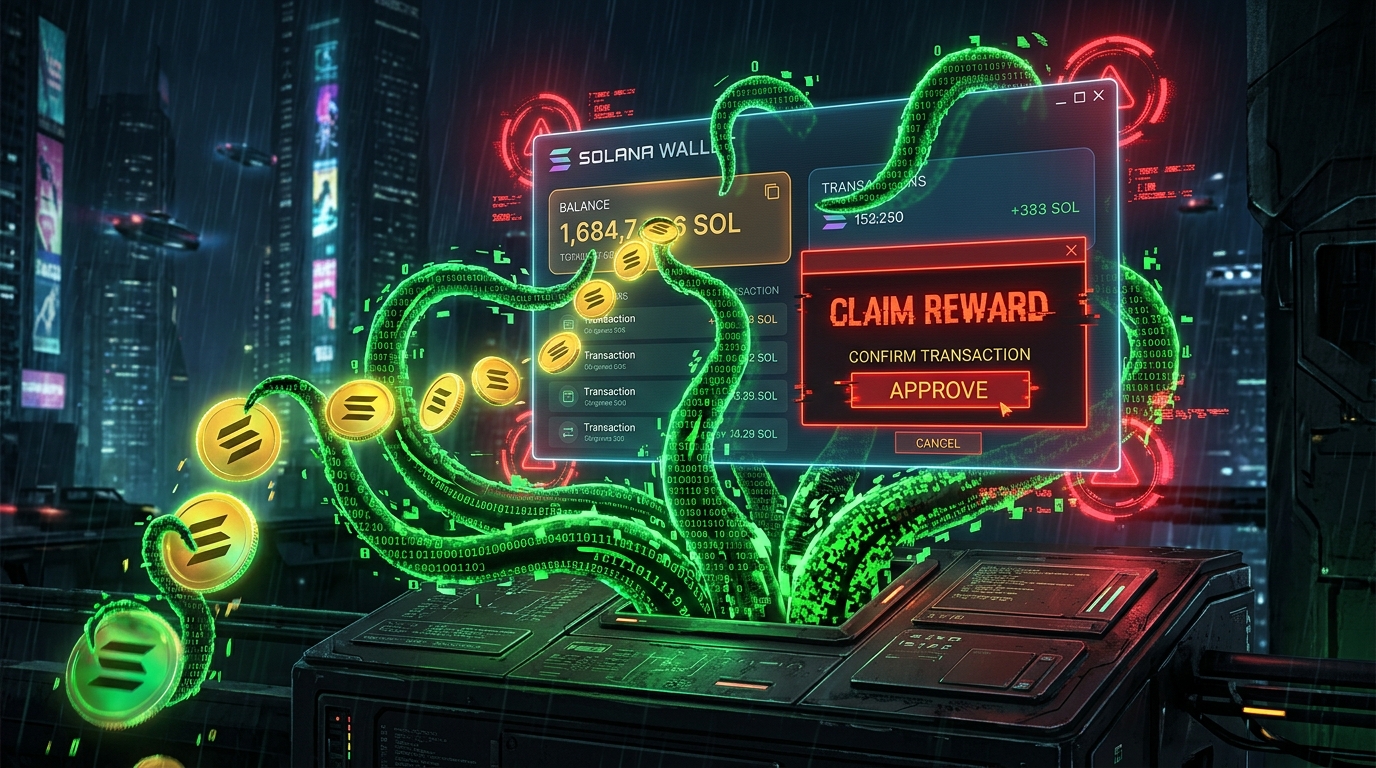
The Evolution of Web3 Phishing
In the early days of crypto scams, stealing funds required tricking victims into typing their twelve-word seed phrase into a fake website. Today, phishing attacks have evolved into automated software exploits known as Drainer Scripts.
Modern drainers do not ask for your seed phrase. Instead, they disguise complex asset liquidation instructions inside an innocent-looking confirmation popup, draining tokens and native SOL in a single block.
How Drainer Scripts Weaponize Approvals
When you click "Claim Airdrop" or "Verify Wallet" on a compromised decentralized application, the drainer backend analyzes your public address in milliseconds. It reads your token balances, identifies your most valuable holdings, and constructs a custom transaction payload:
- Direct System Transfers: The script bundles a native Solana system transfer instruction that forwards your entire liquid SOL balance directly to the attacker's collection wallet.
- Authority Transfers (SetAuthority): For high-value SPL tokens or rare NFTs, the drainer submits a
SetAuthorityinstruction. This reassigns ownership of your Token Account to the scammer, allowing them to withdraw your assets even after you disconnect your wallet. - Deceptive Simulation Bypasses: Modern wallets like Phantom display human-readable transaction simulations showing expected balance changes. Drainers bypass these warnings by routing malicious instructions through proxy contracts or using memo instructions that obscure outgoing token transfers.
Rules for Interacting with New Protocols
Preventing drainer exploits requires strict behavioral discipline:
- Use a Burner Wallet: Never connect your primary savings wallet to claim airdrops, mint new tokens, or interact with unverified decentralized applications. Always use a dedicated throwaway wallet containing only small amounts of SOL.
- Inspect Simulation Popups: If a confirmation popup requests permissions like "SetAuthority" or displays unexpected outgoing token transfers, reject the transaction immediately.
- Revoke Unused Approvals: Regularly audit your active token delegations on tools like Solscan or Solana approval checkers to disconnect inactive smart contracts.
Proactive Threat Detection with RugPullShield
Navigating the Solana ecosystem safely requires knowing which contracts and links are dangerous before you connect. RugPullShield monitors threat signatures, malicious token metadata URIs, and associated phishing clusters in real time.
Verify contract reputation and domain authenticity with RugPullShield so your assets stay protected from sophisticated drainer networks.